



























We apply it diligently (or at least, we should), but how many of us truly understand the powerful science in that bottle of sunscreen? It is not merely a creamy barrier; it is the most proven anti-aging, anti-cancer product in any skincare arsenal. Yet, confusion about SPF numbers, ingredient types, and proper application often leads to a false sense of security and inadequate protection. Understanding the mechanics of how sunscreen works is the key to using it effectively. This article delves deep into the photobiology of sun damage, demystifies the labels on the bottle, and provides a clear, actionable guide to integrating sunscreen into your daily life, ensuring your skin remains healthy, youthful, and protected for years to come.
1. Decoding the Label: What SPF and PA Ratings Actually Mean
The numbers and plus signs on a sunscreen bottle are not just marketing; they are specific, laboratory-measured indicators of protection against different types of solar radiation.
SPF (Sun Protection Factor) – The UVB Shield:
- The Science: SPF primarily measures protection against UVB rays, the shorter-wavelength radiation that is the primary cause of sunburn and plays a key role in developing skin cancer.
- The Math is Not Linear: SPF 30 does not offer twice the protection of SPF 15. Here’s the reality:
- SPF 15 blocks about 93% of UVB rays.
- SPF 30 blocks about 97% of UVB rays.
- SPF 50 blocks about 98% of UVB rays.
- SPF 100 blocks about 99% of UVB rays.
As you can see, the incremental gain in protection plateaus significantly after SPF 30. However, higher SPF can offer a valuable safety margin for those who under-apply.
PA Rating (Protection Grade of UVA) – The “A” for Aging:
- The Science: The PA system, common in Asian sunscreens, measures protection against UVA rays. These are longer-wavelength rays that penetrate deep into the skin. They are the silent aggressors responsible for photoaging—wrinkles, loss of elasticity, and hyperpigmentation—and also contribute to skin cancer.
- The “+” System:
- PA+ = Some UVA protection.
- PA++ = Moderate UVA protection.
- PA+++ = High UVA protection.
- PA++++ = Extremely High UVA protection.
- Broad-Spectrum: In the US, “Broad-Spectrum” indicates the sunscreen has passed FDA testing to prove it protects against both UVA and UVB rays. For the best protection, you must choose a product that is labeled Broad-Spectrum or has a high PA rating (PA+++ or higher).
2. The Molecular Bodyguards: Chemical vs. Physical Sunscreen Mechanisms
Sunscreens work through one of two distinct physical mechanisms, determined by their active ingredients.
Chemical Sunscreens: The Energy Converters
- How They Work: These sunscreens contain organic carbon-based compounds (e.g., avobenzone, oxybenzone, octinoxate, homosalate). They work like a sponge. When UV radiation hits the skin, the molecules absorb the photons of light. This excites the molecules, which then release the energy as a much lower, harmless amount of heat.
- Pros: Tend to be lighter, more cosmetically elegant, and easier to blend without a white cast. Ideal for daily wear under makeup.
- Cons: Can sometimes cause irritation or allergic reactions in sensitive skin. They require about 20 minutes to absorb into the skin and become fully effective after application.
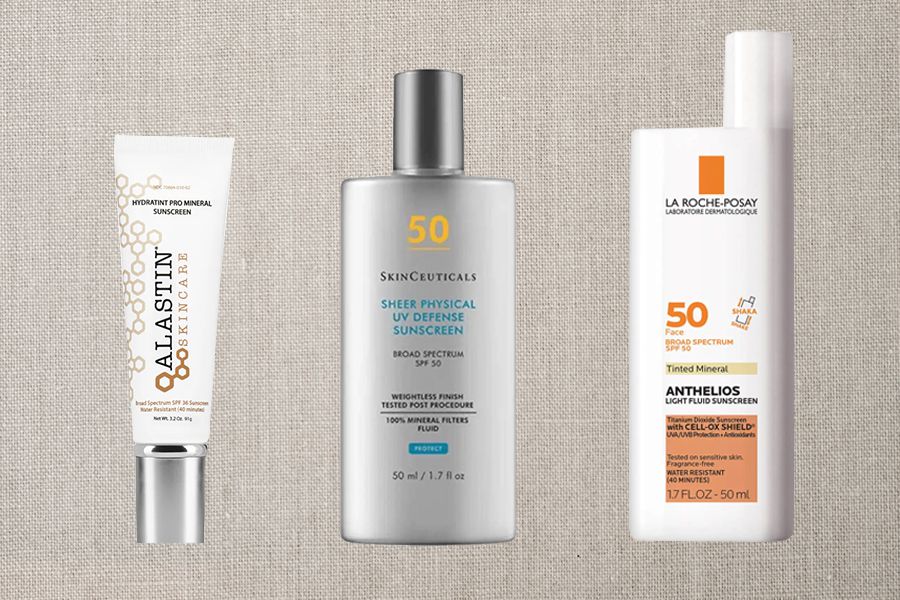
Physical (Mineral) Sunscreens: The Reflective Shield
- How They Work: These use inorganic mineral filters, primarily Zinc Oxide and Titanium Dioxide. They sit on top of the skin and act like millions of tiny mirrors, creating a physical barrier that reflects and scatters UV radiation away from the skin.
- Pros: Immediately effective upon application. Generally better for sensitive, rosacea-prone, and acne-prone skin as they are less likely to cause irritation. Zinc Oxide provides excellent broad-spectrum protection.
- Cons: Can be thicker, heavier, and more difficult to rub in completely, often leaving a white or purplish cast, especially on deeper skin tones. However, modern “micronized” formulations have greatly improved this issue.
The Hybrid Approach: Many modern sunscreens combine both chemical and physical filters to create a formula that is both highly effective and cosmetically pleasing.
3. The Daily Defense: Integrating Sunscreen into Your Everyday Routine
Sunscreen is not just for beach days. Consistent, daily use is what delivers the cumulative, long-term benefits.
The “Two-Finger” Rule for the Face and Neck:
The single biggest mistake is under-application. For your face, neck, and ears, use the two-finger rule. Squeeze a line of sunscreen onto your index and middle finger, from the base to the tip. This is the amount needed to achieve the stated SPF on the label.
Layering Order is Critical:
Sunscreen should be the last step of your skincare routine and the first step of your makeup routine.
- Cleanse
- Tone
- Serum
- Moisturizer
- SUNSCREEN
- Makeup Primer & Makeup
Applying it in the correct order ensures it can form an even, unbroken film on your skin.
Reapplication is Non-Negotiable:
Sunscreen degrades over time when exposed to direct sunlight. It also rubs off, sweats off, and is removed by touching your face.
- General Rule: Reapply every two hours when outdoors.
- After Swimming or Sweating: Reapply immediately, even if the product is “water-resistant.”
- Over Makeup: This is a challenge, but solutions exist. Use a powder sunscreen with SPF or a setting spray with SPF to lightly reapply throughout the day without disturbing your makeup.
4. The Protection Gap: Avoiding Common Sunscreen Mistakes
Even with the best intentions, small errors can create significant gaps in your protection.
Mistake #1: Relying on Makeup with SPF
The SPF in your foundation or BB cream is virtually useless on its own. To achieve the SPF number on the label, you would need to apply a very thick, cakey layer—about seven times the normal amount. Always use a dedicated sunscreen as your base layer.
Mistake #2: Skipping Cloudy Days and Indoor Settings
Up to 80% of UVA rays can penetrate clouds and glass. UVA rays, the aging rays, can pass through windows, meaning you are exposed while driving, sitting by an office window, or even on your couch. Sunscreen is a 365-day-a-year necessity.
Mistake #3: Missing Key Spots
Commonly missed areas include the eyelids (a common site for skin cancer), the ears, the back and sides of the neck, the hairline, the lips (use an SPF lip balm), and the tops of your hands and feet.
Mistake #4: Using Expired Sunscreen
The active ingredients in sunscreen break down over time, rendering it ineffective. Check the expiration date (often marked with a jar symbol). If there isn’t one, a good rule of thumb is to discard any sunscreen that is more than three years old.
Sunscreen is the cornerstone of intelligent skincare. It is a powerful, scientifically-formulated defense system against the relentless assault of solar radiation. By choosing a broad-spectrum product with high UVA protection (high PA rating), understanding whether a chemical or physical formula is best for your skin, applying it generously and consistently every single day, and diligently avoiding common pitfalls, you are not just preventing a sunburn. You are actively investing in the long-term health, youthfulness, and resilience of your skin. It is, without a doubt, the most important product in your routine.