














Overnight hair treatments have become one of the most popular beauty rituals for achieving softer, stronger, smoother hair without the effort of daily styling or hour-long masking sessions. By letting nourishing ingredients soak into your strands for six to eight hours, you give your hair the prolonged contact it needs to repair dryness, reduce frizz, improve manageability, and promote shine.
But not all overnight treatments are equal, and not all hair types benefit the same way. Understanding what products to use, how to apply them, how often to repeat the treatment, and how to elevate results with heat or scalp massages can transform overnight treatments from a trend into a powerful part of your hair-care routine.
Below is a deep dive into everything you need to know.
1. What Types of Overnight Masks and Oils Work Best?
The heart of every effective overnight routine is choosing the right formula. Overnight treatments fall into two major categories: deep-conditioning masks and nourishing oils. The best choice depends on your hair’s texture, porosity, and needs.
1.1 Deep-Conditioning Masks
Overnight masks are designed to deeply hydrate, soften, and repair the hair shaft. These formulas typically contain rich moisturizers and proteins that work slowly throughout the night.
Best ingredients for overnight masks:
- Shea butter: softens and seals moisture
- Coconut oil: penetrates the hair shaft to reduce protein loss
- Argan oil: improves shine and elasticity
- Aloe vera: hydrates and soothes
- Panthenol (pro-vitamin B5): strengthens and smooths
- Keratin or silk proteins: fill in gaps caused by damage
- Glycerin: attracts moisture
Best for:
- Dry or dehydrated hair
- Coarse or thick strands
- Color-treated hair
- Hair exposed to frequent heat styling
- Frizzy or porous hair
Masks are ideal for those needing deep softness and smoothing.
1.2 Nourishing Oils
Oils are excellent for replenishing lipids, sealing moisture, reducing breakage, and lubricating the cuticle. Some oils are penetrating while others are sealing.
Penetrating oils (best for overnight use):
- Coconut oil
- Olive oil
- Avocado oil
- Babassu oil
These enter the cortex and help repair from within.
Sealing oils:
- Jojoba oil
- Argan oil
- Grapeseed oil
- Sweet almond oil
These sit on the surface and prevent moisture loss.
Best for:
- Curly and coily hair
- Thick or coarse strands
- Hair prone to frizz
- Ends that split or tangle easily
Oils are especially effective for reducing breakage and improving shine.
1.3 Should You Combine Masks and Oils?
Yes — combining both can create a powerful two-step overnight treatment.
Two-way method:
- Apply a hydrating mask first.
- Seal with a lightweight oil on the ends.
This locks moisture in place and gives long-lasting softness.
Great for very dry, damaged, or high-porosity hair.
2. What Are the Most Effective Application Methods?
How you apply an overnight treatment determines how much benefit you get. Technique matters just as much as product.
2.1 Apply on Damp, Not Wet Hair
Damp hair:
- Absorbs ingredients better
- Distributes product more evenly
- Prevents dilution
- Reduces overnight dripping
You can lightly mist hair or apply after washing and towel drying.
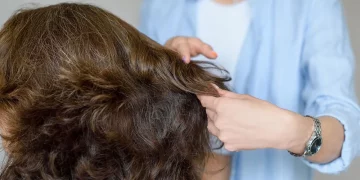
2.2 Sectioning Is Key
Divide hair into:
- Four sections for straight or wavy hair
- Six or more for curly or coily hair
This ensures you cover every strand and avoid heavy buildup in isolated spots.
2.3 Focus on the Mid-Lengths and Ends
The ends are most vulnerable because they are the oldest. Apply:
- 70% of the product to ends
- 20% to mid-lengths
- 10% to the roots (only if you have dryness or flaking)
Avoid placing heavy mask on the scalp unless you are using scalp-specific treatments.
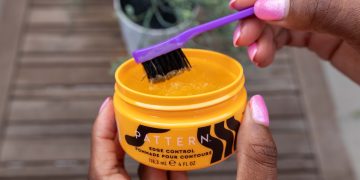
2.4 Use Combs or Brushes to Distribute Evenly
Tools help spread product:
- Wide-tooth comb for curls
- Detangling brush for straight or wavy hair
This ensures even absorption and prevents clumps of product.
2.5 Protect Your Pillow and Clothes
Use:
- A silk or satin bonnet
- A shower cap
- A microfiber wrap
- A silk pillowcase
This prevents product transfer and keeps treatment close to the hair.
3. How Often Should You Use Overnight Treatments?
Frequency depends entirely on your hair type and condition.
3.1 Straight or Fine Hair
Once every 2–3 weeks
Fine hair can get weighed down easily. Choose lightweight masks and oils.
3.2 Wavy Hair (Type 2)
Once every 1–2 weeks
Wavy hair loses moisture quickly but still prefers lighter hydrators.
3.3 Curly Hair (Type 3)
Once per week
Curls benefit greatly from deep moisture and overnight penetration.
3.4 Coily or Kinky Hair (Type 4)
1–2 times per week
This hair type has naturally fragile cuticles and thrives with rich overnight treatments.
3.5 Color-Treated or Chemically Treated Hair
Once per week minimum
Chemical processing causes deep dryness and structural weakness.
3.6 Overuse Warning
Too frequent overnight treatments can cause:
- Product buildup
- Greasiness
- Reduced volume
- Protein overload (if using protein masks)
Monitor how your hair responds and adjust accordingly.
4. Does Combining Overnight Treatments with Heat or Scalp Massage Improve Results?
Absolutely. Heat and massage amplify ingredient penetration and circulation.
4.1 Using Heat for Better Absorption
Heat opens the cuticle, helping nutrients enter deeper layers of the hair shaft.
Safe heat options:
- Heated cap or bonnet
- Warm towel wrapped around hair
- Low-heat hooded dryer (10 minutes only)
- Body heat from wearing a shower cap overnight
Avoid high heat — you only need gentle warmth.
Heat works especially well for:
- Low-porosity hair
- Thick or coarse hair
- Masks containing proteins or butters
4.2 Scalp Massage: A Major Booster
Massaging the scalp right before applying treatment:
- Boosts blood circulation
- Enhances nutrient delivery
- Reduces stress
- Encourages healthier growth
A 5–8 minute massage using fingertips or a silicone scalp brush is enough.
Best oils for scalp massage:
- Jojoba (closest to natural sebum)
- Castor oil (supports stronger roots)
- Rosemary oil (circulation-boosting)
- Tea tree oil (for flaky scalps)
Always dilute essential oils with a carrier oil.
4.3 Combining All Techniques
For maximum results:
- Apply treatment to damp hair
- Perform a scalp massage
- Put on a shower cap
- Cover with a silk or satin bonnet
- Sleep with gentle heat trapped inside
This layered method transforms hair dramatically in one night.
5. What Kind of Results Can You Expect?
The morning after an effective overnight treatment, you may notice:
Immediate improvements:
- Softer texture
- Less frizz
- More shine
- Easier detangling
- Smoother ends
- More defined curls or waves
Long-term improvements (after 3–6 uses):
- Reduced split ends
- Better elasticity
- Stronger hair fibers
- More consistent moisture levels
- Enhanced growth retention
- Less breakage during styling
Overnight treatments create cumulative benefits — the more consistent you are, the healthier your hair becomes.
Conclusion: Are Overnight Hair Treatments Worth It?
Yes — when chosen and applied correctly, overnight hair treatments are one of the most effective ways to restore deep hydration, repair damage, improve shine, and strengthen your hair.
By selecting the right masks or oils, applying them properly, using the right frequency, and pairing them with heat or scalp massages, you unlock powerful restorative effects that daytime treatments simply cannot match.
Healthy hair is a result of consistency. Overnight treatments give you maximum benefits with minimal effort — making them a simple but transformative part of your routine.