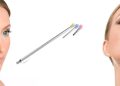




























The desire to reshape the nose—one of the most central and defining features of the face—has traditionally led to one destination: the surgical suite. Rhinoplasty is a complex and permanent procedure, requiring anesthesia, significant downtime, and a lengthy recovery. However, a new alternative has surged in popularity: the non-surgical rhinoplasty, or the “15-minute nose job.” Using strategically placed dermal fillers, practitioners can camouflage bumps, lift drooping tips, and straighten profiles without a single incision. But can this quick, in-office procedure truly replace the transformative power of surgery? The answer is a nuanced but critical one: while injectable enhancements offer a remarkable solution for specific concerns, they are a fundamentally different tool with distinct limitations, and understanding this distinction is the key to achieving a result that aligns with your goals and anatomy.
1. The Art of Illusion: How Injectable Reshaping Works
A non-surgical rhinoplasty does not remove bone or cartilage. Instead, it uses hyaluronic acid-based dermal fillers to strategically add volume, creating optical illusions that alter the nose’s appearance.
The Principle of Camouflage and Projection:
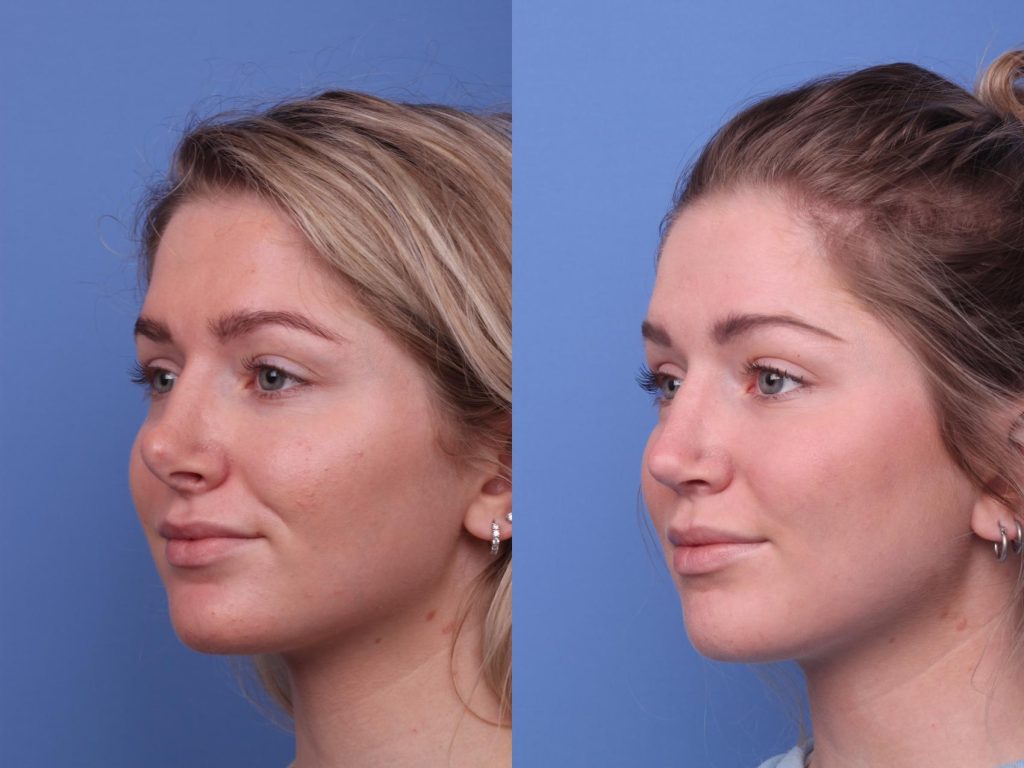
- Smoothing a Dorsal Hump: This is the most common request. Instead of shaving down the bony and cartilaginous hump, the injector places filler above and below the bump. By building up the areas immediately adjacent to the hump, the dorsal line becomes a straight, smooth line from the brow bone to the tip, effectively “camouflaging” the prominence.
- Lifting the Nasal Tip: A drooping or plunging nasal tip can make the nose appear longer and can accentuate a hanging columella (the tissue between the nostrils). A small, precise amount of filler injected into the caudal septum—the support structure at the base of the tip—can provide a subtle but noticeable lift, rotating the tip upward. This can also shorten the appearance of a long nose.
- Straightening a Crooked Nose: For noses with a mild deviation or a “C-shaped” curve, filler can be used to fill the concave (sunken-in) side, creating a more symmetrical and centered appearance.
- Building Up a Flat Bridge: For patients who desire a higher, more defined nasal bridge, filler can be injected along the dorsum to create the illusion of a stronger, more projected nose.
The entire procedure is typically performed in 15-30 minutes with only topical anesthetic, and the results are immediate.
2. The Ideal Candidate: Who Qualifies for a Non-Surgical Approach?
Not every nose is a candidate for a non-surgical solution. The perfect candidate has specific, minor concerns that filler is uniquely suited to address.
You may be an excellent candidate if your primary concerns are:
- A small to moderate dorsal hump that you wish to smooth out.
- A slightly drooping nasal tip that needs a subtle lift.
- A mild asymmetry or crookedness.
- A flat or low nasal bridge you wish to enhance.
- A desire to test out a potential surgical result before committing to a permanent procedure.
- A need for minimal downtime and a lower upfront cost compared to surgery.
Psychological Readiness: The ideal candidate also has realistic expectations. They understand they are not getting a surgical result but rather a refined version of their existing nose. They are seeking improvement, not perfection.
3. The Inherent Limitations: What Non-Surgical Rhinoplasty Cannot Do
This is the most critical section. The limitations of the non-surgical approach are absolute and define the boundary between it and surgery.
It Cannot Make a Large Nose Smaller:
This is the single greatest misconception. Fillers add volume; they do not remove it. A non-surgical rhinoplasty will actually make your nose slightly larger in its dimensions. For patients with a wide or generally large nose, adding filler is counterproductive and can make the nose appear even broader.
It Cannot Refine a Wide or Bulbous Nasal Tip:
Surgery can sculpt the underlying cartilages to narrow and define a bulbous tip. Filler cannot achieve this. In fact, adding filler to a wide tip will only make it appear larger and more amorphous.
It Cannot Correct Functional Breathing Issues:
A deviated septum, collapsed nasal valves, or enlarged turbinates that cause breathing problems are structural issues that require surgical intervention to remove or reposition tissue and open the airway. Filler does not improve and can sometimes even worsen breathing if it impinges on the nasal valve.
It Cannot Address Significant Asymmetry or Trauma:
Noses with severe deviations from past breaks or congenital issues require the foundational restructuring that only surgery can provide.
4. Navigating the Risks: Understanding Possible Complications
While less invasive than surgery, non-surgical rhinoplasty carries its own set of risks, some of which are uniquely serious due to the nasal anatomy.
Common, Temporary Side Effects:
- Swelling, redness, tenderness, and bruising at the injection sites. These typically resolve within a week.
Serious, Vision-Threatening Complications:
The nose is one of the most high-risk areas for injection due to its unique and complex blood supply.
- Vascular Occlusion: This is the most severe risk. It occurs when filler is inadvertently injected into an artery. The filler can then block the blood flow, leading to tissue death (necrosis) of the skin of the nose. Even more dangerously, the occluded artery can be a terminal vessel connected to the ophthalmic artery, potentially causing retinal artery occlusion and permanent blindness. This is a medical emergency that requires immediate treatment with hyaluronidase (a dissolving enzyme).
- The Importance of the Practitioner: The risk of vascular occlusion is drastically reduced—though never eliminated—by choosing an expert injector. This should be a board-certified dermatologist or plastic surgeon with an intimate, anatomical knowledge of the nasal blood vessels and extensive experience in both injecting and managing complications. They know the “safe zones” and use techniques like blunt-tip cannulas to minimize risk.
5. The Temporary Transformation: Duration and Maintenance of Results
A non-surgical rhinoplasty is not a permanent solution. The hyaluronic acid fillers used are naturally metabolized by the body over time.
- Typical Longevity: Results generally last between 9 to 18 months, depending on the specific filler used (thicker, more cohesive fillers are preferred for the nose and tend to last longer) and an individual’s metabolism.
- The Maintenance Cycle: To maintain the result, patients must return for touch-up treatments once the filler begins to dissipate. Over many years, this can represent a significant financial investment that may eventually surpass the one-time cost of a surgical rhinoplasty.
- The “Filler Buildup” Consideration: While hyaluronic acid is biodegradable, some experts theorize that repeated injections over many years could lead to a slight, permanent thickening of the nasal tissue due to the body’s fibrotic response. This is a consideration for long-term planning.
The non-surgical nose job is a powerful and innovative aesthetic tool, but it is not a replacement for rhinoplasty. It is a complementary procedure that exists on a different spectrum of care. It is ideal for the patient with minor contour concerns who seeks a subtle refinement with no downtime. However, for anyone requiring a reduction in size, significant tip refinement, or functional correction, traditional rhinoplasty remains the only viable and effective option. The decision ultimately hinges on a clear-eyed assessment of your anatomical starting point, your aesthetic goals, and a thorough consultation with a highly qualified medical professional who can honestly advise which path—the art of illusion or the science of surgery—is right for you.