




















Hooded eyes, characterized by a fold of skin that droops down from the brow bone, partially or fully covering the mobile eyelid, are a beautiful and common eye shape. However, for those who have them, applying eye makeup can feel like a frustrating exercise in futility. Hours of careful blending and precise liner work can vanish the moment you open your eyes, leaving behind only a hint of color in the crease and, all too often, messy transfer on the upper lid. This struggle leads many to believe they are “bad at makeup,” when in reality, they are simply using techniques designed for a different eye anatomy. The secret to mastering makeup for hooded eyes is not to fight their natural structure, but to understand and work with it. This complete guide will redefine your approach, transforming your routine from one of concealment to one of enhancement. We will dissect the common struggles, master placement techniques that make color visible, explore eyeliner methods that lift the eye, and unlock blending secrets that create depth and dimension, finally allowing your eye makeup to be seen.
Understanding the Core Struggle: Why Standard Techniques Fail
The fundamental challenge with hooded eyes is the lack of visible lid space when the eyes are open. This single anatomical feature renders many mainstream makeup tutorials ineffective.
- The Disappearing Act: Elaborate eyeshadow looks, cut creases, and intricate liner designs that are stunning on a canvas of a large, visible lid simply vanish under the hood when the eyes are open. The artwork is hidden in the fold, making the effort feel wasted.
- Transfer and Smudging: This is perhaps the most common daily frustration. Any product applied to the mobile lid is in constant contact with the skin above it. This leads to eyeliner and dark eyeshadow transferring onto the upper lid, creating a messy, smudged appearance within hours—or even minutes.
- The “Heavy” or “Tired” Look: Applying dark eyeshadow in the traditional crease (the socket line) can often make hooded eyes appear more deep-set, heavy, or even sleepy, as it reinforces the downward fold.
- Eyeliner Obscuring Lid Space: A thick, horizontal line of eyeliner across the lid can consume the precious little mobile lid space that is visible, making the eyes appear smaller and more closed off.
The paradigm shift is this: The primary canvas for your eye makeup is not the lid you see when your eyes are closed, but the space that is visible when your eyes are open.
Mastering Placement: Creating a New, Visible Canvas
The goal of placement is to create the illusion of a higher, more lifted crease and a larger visible lid space. This is achieved by applying color and depth strategically to “fake” a new eye shape.
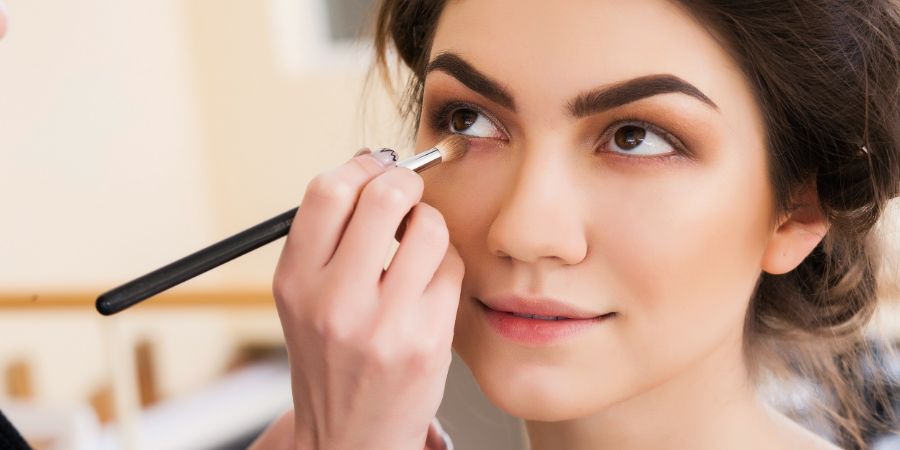
- Find Your “False Crease”: This is the most critical step. Look straight ahead into a mirror. The area of your brow bone that is visible above the hood is your new workspace. Your eyeshadow crease color will be applied above your natural crease, onto this visible space. Use a transition shade to draw a new, higher crease line, following the natural curve of your eye but placing it well above where the skin folds over.
- The “Stamped” Application Method: Trying to blend with sweeping, back-and-forth motions while looking down can lead to misplaced color. Instead, apply your crease color with your eyes open, looking straight ahead. Use a tapered blending brush to “stamp” the color onto the area you want to define—the new, higher crease. Then, close your eye and blend the edges softly, ensuring not to bring the color too far down.
- The Strategic Lid: Since the mobile lid is often hidden, use it for pops of color or shimmer that will peek through when you blink, rather than for complex designs. Applying a light, shimmery shade on the center of the mobile lid can help catch the light and make the eyes appear more open.
- Brow Bone Highlighting: Apply a matte or satin highlight directly under the arch of your brow. This brings light to the highest point of the eye area, further lifting the entire eye shape.
Eyeliner Methods That Lift and Define
Eyeliner for hooded eyes must be strategic. The goal is to create the illusion of an upward lift and to maximize the appearance of lid space.
- The “Puppy Liner” or “Straight Liner” Technique: Instead of drawing a classic winged liner that extends upwards from the corner, try following your lower lash line’s natural, slightly downward slope. This “puppy” style avoids the hood and creates a soft, youthful look. Alternatively, draw a straight line extending outwards from the eye, parallel to the floor, which can help widen the eye shape.
- The Classic Wing, Reimagined (“Map It Out” Method): A winged liner is possible, but it requires a new approach.
- Step 1: The Guide Line. With your eyes open, look straight ahead. Use a thin brush or a pencil to draw a dot where you want the wing to end. This line should follow the imaginary extension of your lower lash line upwards, not your upper lash line.
- Step 2: Connect with Eyes Open. Still looking forward, draw a line connecting the dot to your upper lash line. You will likely have to draw this line over the hooded fold. This is correct.
- Step 3: Fill It In. Close your eye and fill in the shape. The result will look like a broken, uneven triangle when your eye is closed, but when you open your eye, it will transform into a sharp, perfect wing.
- Tightlining is Your Best Friend: Tightlining—applying liner to the upper waterline and between the lashes—is essential. It adds definition and the appearance of fuller lashes without taking up any valuable lid space.
- The “Vanishing” Liner: Keep the liner very thin at the inner corner of the eye, gradually thickening it as you move outward. This prevents the liner from “swallowing” the inner part of the lid.
Shadow Blending: Creating Dimension Without Mud
Blending is what makes eyeshadow look professional, but on hooded eyes, poor blending can quickly turn into a muddy, undefined mess.
- The Transition Shade is Non-Negotiable: Always start with a matte, skin-toned or slightly deeper transition shade. Apply this in your new, higher crease first. This shade does the heavy lifting of creating depth and making it easier to blend other colors seamlessly without harsh lines.
- Work in Thin Layers: Hooded eyes have more skin texture and folds, which can cause eyeshadow to deposit color unevenly. Instead of loading up your brush, apply product in thin, buildable layers, blending thoroughly between each one.
- The “Windshield Wiper” is the Enemy: Avoid aggressively blending back and forth in a wide, horizontal motion. This distributes color too broadly and can make the eye look bruised. Instead, use small, tight, circular motions at the point of application, focusing on softening the edges.
- Blend Upwards and Outwards: The direction of your blend is crucial. Always blend your eyeshadow upwards towards your tailed brow and outwards towards your temple. This reinforces the lifting effect and prevents color from dragging down into the hood.
- The Final Check: Eyes Open: Throughout the entire process, constantly check your work with your eyes open and looking straight ahead. This is the only way to ensure the placement, liner, and blending are effective in their final, visible form.
Conclusion: Embracing and Enhancing Your Unique Eye Shape
Mastering eye makeup for hooded eyes is a journey of re-education and practice. It requires letting go of conventional techniques and embracing a new set of rules designed specifically for your beautiful eye shape. The struggles of disappearing makeup and transfer are not a life sentence; they are simply a sign that the method needs to change. By shifting your canvas to the visible space, mastering lifting placement techniques, re-engineering your eyeliner application, and refining your blending for dimension, you can transform your relationship with eye makeup. The goal is no longer to hide the hood, but to use color, light, and shadow to enhance the natural almond shape, create a lifted, awake appearance, and finally create eye looks that are not only technically impressive but are also fully visible and stunning from the moment you open your eyes.