























Thick hair is a blessing—full, voluminous, dramatic, and naturally eye-catching. But its density also means it requires a different level of care than fine or medium textures. Thick hair dries out faster, tangles more easily, and can lose curl or wave definition without proper maintenance. The good news? With the right hydration strategies, gentle detangling methods, curl-preserving habits, and protective styling techniques, thick hair can look its healthiest every day.
This in-depth guide explores the science and best practices behind moisture retention, damage-free detangling, curl pattern preservation, and protective styles designed especially for thick hair.
1. What Are the Most Effective Hydration Strategies for Thick Hair?
Thick hair naturally struggles with moisture distribution. Because each strand has a larger diameter, water and oils have a harder time penetrating deep into the cortex. That’s why thick hair often looks full but can feel dry or coarse.
Here’s how to deeply hydrate it.
Use a Pre-Wash Oil or Treatment
Thick hair responds exceptionally well to pre-wash oils because they help:
- Prevent moisture loss during shampooing
- Soften the strands before cleansing
- Reduce tangles and breakage
Effective oils include:
- Coconut oil
- Argan oil
- Sweet almond oil
- Babassu oil
- Olive oil
Leave on for 20–60 minutes before washing.
Choose a Rich, Creamy Conditioner
Thick hair thrives on nourishing conditioners with:
- Shea butter
- Cupuaçu butter
- Glycerin
- Ceramides
- Fatty alcohols (cetyl, cetearyl)
These ingredients help smooth the cuticle and retain moisture for days.
Deep Condition Weekly—Non-Negotiable
Thick hair often needs more than a regular conditioner can provide. A weekly deep conditioner:
- Restores elasticity
- Increases softness
- Defines curls or waves
- Reduces frizz and puffiness
Look for formulas with proteins and humectants for balanced conditioning.
Use the LOC or LCO Method
For long-lasting hydration, layering products works extremely well:
LOC Method (Leave-in → Oil → Cream)
Best for thick, curly, or dry hair.
LCO Method (Leave-in → Cream → Oil)
Great for thick hair that needs moisture but becomes weighed down easily.
Experiment to see which layering order your hair prefers.
Avoid Over-Washing
Thick hair doesn’t need daily shampooing. Washing too often can remove natural oils, leading to:
- Dryness
- Puffiness
- Frizz
- Lack of definition
Aim for washing every 3–7 days depending on scalp needs.
Seal Moisture with Oils or Butters
After applying leave-in or cream, seal hydration with lightweight oils (for waves) or nourishing butters (for curls):
- Argan oil
- Grapeseed oil
- Castor oil
- Shea butter
This prevents moisture from evaporating and keeps hair soft for longer.
2. How Can You Detangle Thick Hair Without Causing Damage?
Detangling thick hair requires patience, the right tools, and technique. Pulling, ripping, or rushing can cause breakage, split ends, and stress on the scalp.
Here’s how to detangle safely.
Always Detangle When Wet or Damp
Dry detangling thick hair can lead to tearing. Instead:
- Detangle in the shower with conditioner
- Or use a spray bottle to dampen hair before brushing
Water + slip = easier, safer detangling.
Use Plenty of Slip
Conditioners and detangling sprays reduce friction, making hair easier to comb through. Look for ingredients like:
- Silicone
- Aloe vera
- Marshmallow root
- Coconut extract
- Behentrimonium chloride
More slip = fewer broken strands.
Start from the Ends and Work Up
The golden rule:
- Begin detangling the bottom 2–3 inches
- Gradually work your way up the shaft
- Finish near the roots
This minimizes knots and prevents creating new tangles.
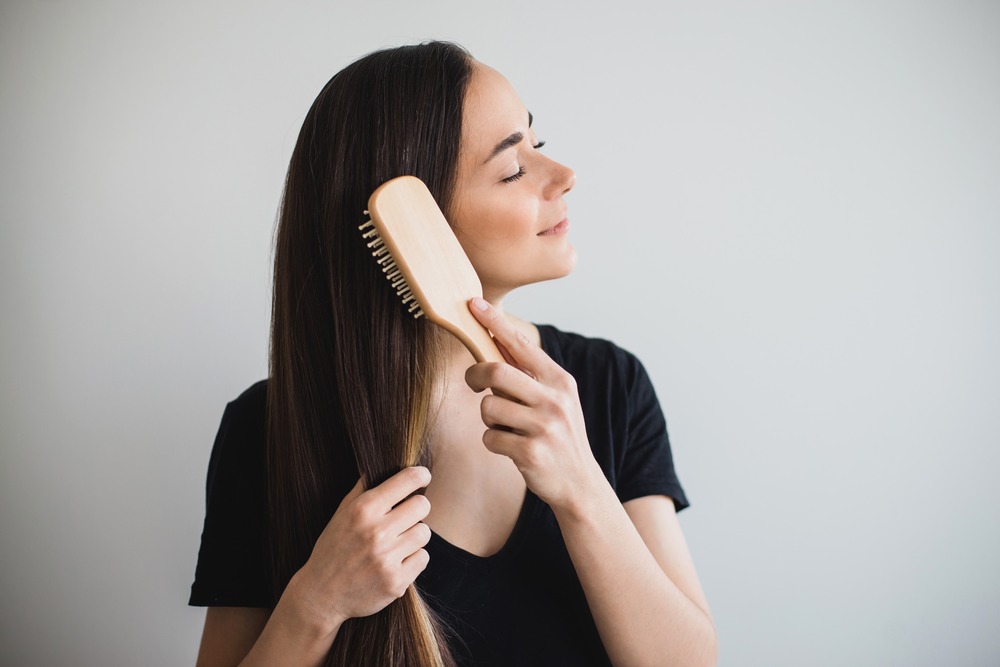
Use Tools Designed for Thick Hair
Best options include:
- Wide-tooth comb
- Detangling brush
- Paddle brush with flexible bristles
- Fingers (for delicate curls)
Avoid thin-toothed combs and stiff bristles, which snag on dense textures.
Sectioning Is Essential
Divide hair into 4–8 sections. Smaller sections make detangling:
- Faster
- More manageable
- Less damaging
Clip back other sections to prevent re-tangling.
Be Gentle Around the Roots
Thick hair can be heavy. Rough detangling at the roots can cause:
- Follicle stress
- Soreness
- Traction-related breakage
Supporting the roots with your hand reduces tension.
3. How Do You Preserve Curl Pattern and Definition in Thick Hair?
Thick wavy and curly hair can lose shape easily due to dryness, friction, and improper product choice. Preserving curl definition requires moisture balance and styling techniques.
Hydrate Before Styling
Curls form best when the hair is:
- Properly moisturized
- Slightly damp (not dripping)
- Coated with a leave-in or curl cream
Dry curls = frizz, fuzziness, and uneven pattern.
Use Curl Creams, Gels, or Mousses
Each product type offers benefits:
- Curl creams: moisturize and define
- Gels: hold shape and reduce frizz
- Mousse: adds volume without heaviness
Thick hair often does well with a cream + gel combo for soft but long-lasting definition.
Use the “Praying Hands” and Scrunching Techniques
These methods help distribute product evenly and encourage curl formation:
- Smooth product down the hair shaft
- Scrunch the ends upward
- Repeat for each section
This creates a consistent curl pattern.
Avoid Rough Towel-Drying
Use microfiber towels or cotton t-shirts to prevent frizz and maintain definition.
Avoid:
- Terry cloth towels
- Vigorous rubbing
These disrupt curl clumps.
Diffuse Instead of Air-Drying (If Needed)
For maximum definition and volume:
- Use a diffuser on low heat
- Cup curls upward
- Avoid touching hair as it dries
Diffusing can enhance curl structure significantly.
Pineapple at Night
To preserve curls overnight:
- Gather hair loosely at the top of your head
- Use a satin scrunchie
- Sleep on a satin/silk pillowcase
This prevents flattening, tangling, and frizz.
4. What Protective Hairstyles Work Best for Thick Hair?
Protective hairstyles reduce breakage, maintain moisture, and minimize friction—especially important for thick hair prone to dryness.
Loose Braids and Twists
Perfect for:
- Reducing tangles
- Maintaining definition
- Preventing split ends
Avoid tight styles that cause scalp tension.
Buns and Updos
Low buns and top knots help:
- Protect ends
- Reduce friction
- Keep hair contained
Use soft, snag-free scrunchies instead of rubber bands.
Pineapple or High Ponytail for Curly Hair
Reduces crushing and keeps curls intact between washes.
Make sure to:
- Avoid over-tightening
- Change placement daily to prevent stress points
Protective Styles for Long-Term Wear
For multi-day protection:
- Box braids (gentle tension)
- Twists
- Halo braids
- Crown braids
These styles let thick hair rest and hold moisture longer.
Accessories That Reduce Damage
Choose:
- Silk scarves
- Satin-lined caps
- Smooth hair clips
- Large claw clips
These minimize friction and prevent breakage.
Final Thoughts: How Can You Keep Thick Hair Healthy, Defined, and Hydrated?
Thick hair thrives when moisture is abundant, detangling is gentle, curl pattern is respected, and protective styles are part of the routine. With these strategies, your hair can stay nourished, defined, and beautifully manageable every day.
Remember: consistency is the backbone of healthy thick hair.