


























While we sleep, our bodies enter a state of profound restoration, and our skin is no exception. This is not merely a period of rest, but an active repair shift where cell turnover peaks, DNA damage is mended, and the day’s environmental assaults are processed. A thoughtful nighttime skincare routine is not a luxury; it is the single most effective way to partner with your skin’s innate biology, amplifying its natural healing processes. By strategically applying repairing actives, mastering the art of layering, and understanding the synergy with sleep itself, you can transform your nights into a powerful tool for achieving a healthier, more radiant, and youthful complexion. This guide will outline the perfect evening regimen, from the essential repairing ingredients to the precise order of application, and introduce weekly add-ons to target specific concerns.
The Powerhouse Players: Essential Repairing Actives for Overnight Success
Your nighttime products should be the most potent and targeted in your arsenal. These are the ingredients that work in concert with your body’s circadian rhythm to drive repair.
- Retinoids (Vitamin A): The undisputed gold standard for anti-aging and cellular renewal. Retinoids, available in prescription strength (Tretinoin) or over-the-counter (Retinol), accelerate skin cell turnover, boost collagen production, and help fade hyperpigmentation. They are most effective at night as they can be deactivated by sunlight.
- Peptides: These chains of amino acids act as messengers, signaling the skin to produce more collagen. They are gentle, well-tolerated, and excellent for strengthening the skin’s foundation and improving firmness.
- Niacinamide (Vitamin B3): A true multi-tasking hero. It works to repair the skin barrier, reduce inflammation, calm redness, control oil production, and minimize the appearance of pores. It pairs beautifully with almost every other active ingredient.
- Ceramides: These are the essential lipids that make up nearly 50% of your skin’s barrier. Applying them overnight helps to replenish and fortify this protective wall, locking in moisture and protecting against trans-epidermal water loss (TEWL), which is crucial for the repair process.
- Alpha-Hydroxy Acids (AHAs): Such as Glycolic or Lactic Acid. While often used in cleansers or toners, a weekly overnight AHA treatment can exfoliate the surface, revealing brighter skin and allowing other products to penetrate more effectively. Caution: Do not use AHAs on the same night as retinoids.

The Art of the Sequence: Mastering Nighttime Layering
The order of application is critical to ensure each product can perform its job without being blocked by another.
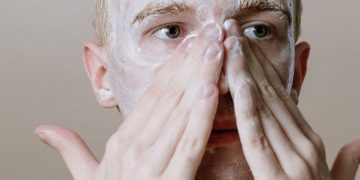
- First Step: Double Cleanse.
- Oil-Based Cleanse: To dissolve sunscreen, makeup, and pollution.
- Water-Based Cleanse: To remove sweat, dirt, and any residue. A clean canvas is non-negotiable for absorption.
- Second Step: Tone or Essence (Optional but Beneficial).
- A hydrating toner or essence restores the skin’s pH and provides a base layer of hydration, preparing it for the active ingredients to come.
- Third Step: Treatment Serums (The Active Repair Phase).
- Apply your thinnest, water-based treatment first. This is typically where you would use a Niacinamide serum or a very lightweight AHA/PHA toner.
- Follow with your heavier treatment. This is where Retinoids come in. If you are not using a retinoid, a peptide serum would be ideal here.
- General Rule: Apply from thinnest to thickest consistency.
- Fourth Step: Moisturizer (The Seal).
- Your moisturizer’s job is to seal in all the active ingredients and provide a protective, occlusive barrier. Look for a formula containing Ceramides, Cholesterol, and Fatty Acids to support barrier repair. For very dry skin, a richer night cream is appropriate.
- Fifth Step: Face Oil (Optional, for Extra Dry Skin).
- If used, a face oil should always be your final step. Oils are occlusive and will block the penetration of any water-based products applied on top.
The Synergy of Sleep: How Your Body Amplifies Your Routine
Your skincare routine doesn’t work in a vacuum; it works in powerful synergy with your body’s nocturnal processes.
- Increased Blood Flow: During deep sleep, blood flow to the skin increases, which helps deliver the nutrients from your skincare products more efficiently to the skin cells.
- Heightened Cell Regeneration: The production of human growth hormone (HGH) peaks during sleep, which is crucial for collagen synthesis and the repair of damaged cells.
- Reduced Stress Hormones: Cortisol levels drop at night. Since cortisol can break down collagen and trigger inflammation, this quiet period is the ideal time for reparative ingredients to work without interference.
- The Pillow Factor: Sleeping on a silk or satin pillowcase reduces friction, preventing sleep wrinkles and helping to keep your skincare products on your face instead of being absorbed by your pillow.
Weekly Add-Ons: Targeted Treatments for Enhanced Results
A consistent nightly routine forms the foundation, but weekly treatments can address specific concerns more intensively.
- The Exfoliating Night (1-2 times per week):
- On a night you are not using a retinoid, incorporate a leave-on AHA (like Glycolic Acid) or BHA (Salicylic Acid) treatment. Apply after cleansing and toning, wait 20 minutes, then follow with your hydrating serums and moisturizer. This deeply exfoliates, unclogs pores, and boosts radiance.
- The Hydrating Mask Night (1-2 times per week):
- After your serum step, apply a thick layer of a hydrating or reparative mask packed with ingredients like Hyaluronic Acid, Ceramides, or Centella Asiatica. Leave on for 20-30 minutes, then tissue off the excess or rinse lightly. Follow with your moisturizer. This provides a massive surge of hydration to support the barrier.
- The Soothing Mask Night (As needed for sensitivity):
- If your skin is feeling irritated or red from actives, skip the treatments and use a calming mask with ingredients like Oat, Centella, or Aloe. This helps reset the skin and reduce inflammation.
Conclusion: Your Nightly Investment in Skin Health
Your nighttime skincare routine is an investment with compounding returns. By strategically deploying repairing actives like retinoids and peptides, layering them in the correct sequence to maximize efficacy, and leveraging the body’s own powerful repair cycle during sleep, you create a perfect storm for skin transformation. This is not about a complex 10-step ritual, but a purposeful and intelligent approach to care. When you commit to this nightly practice, you are not just applying products; you are actively participating in your skin’s renewal process, waking up each day to a complexion that is calmer, stronger, and visibly rejuvenated.