














The battle against stubborn fat deposits has long been a driving force in the cosmetic industry. For decades, liposuction was the only definitive solution, an effective but invasive surgical procedure with associated risks and downtime. Then, a revolutionary concept emerged: what if you could selectively reduce fat cells without surgery, incisions, or anesthesia? This promise was realized with the advent of CoolSculpting, the brand name for cryolipolysis, a technology that has dominated the non-invasive fat reduction market and sparked a wave of similar innovations. But how can something as simple as cooling eliminate fat? Is it truly effective, and for whom? This article delves deep into the science of cold-induced fat cell death, separating the compelling marketing from the clinical reality to provide a clear-eyed view of what these technologies can and cannot achieve.
1. The Science of Controlled Cold: The Mechanism of Cryolipolysis
The fundamental principle behind CoolSculpting is cryolipolysis—a term derived from “cryo” (cold), “lipo” (fat), and “lysis” (breakdown). The technology is built upon a fascinating biological observation known as “popsicle panniculitis,” where children who frequently sucked on popsicles developed dimples in their cheeks due to cold-induced fat loss.
The Process of Apoptosis: Unlike trauma or necrosis, which is uncontrolled cell death causing inflammation, cryolipolysis induces a programmed, natural cell death called apoptosis. Here’s how it works:
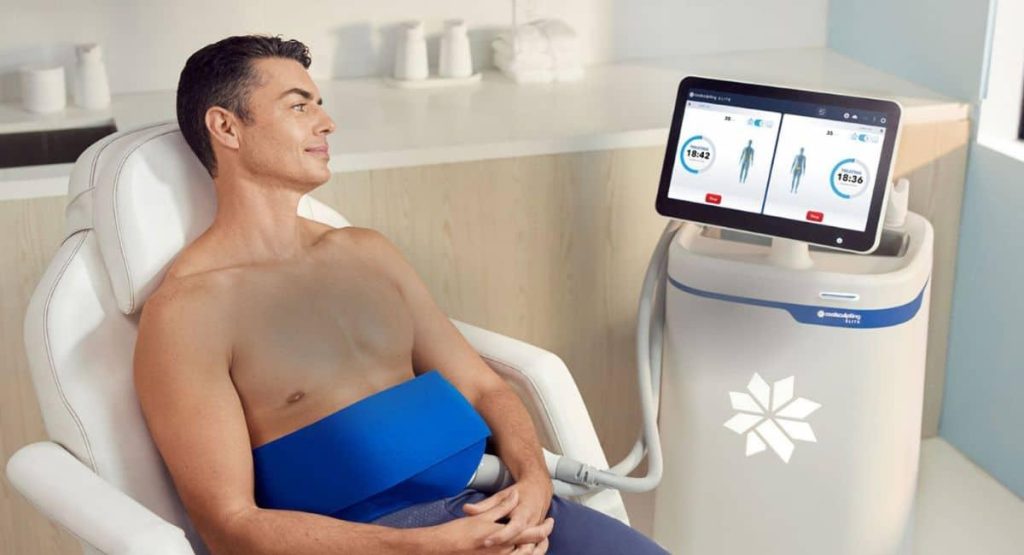
- Targeted Cooling: The CoolSculpting applicator is placed on the target area, drawing the skin and underlying fat tissue into a vacuum cup. The device then precisely cools the fat to a specific temperature that is cold enough to trigger cell death in adipocytes (fat cells) but not cold enough to damage the surrounding skin, nerves, or muscle.
- Crystallization and Signaling: The cooling causes the fat cells to undergo a process where their lipid contents begin to crystallize. This acts as a “death signal,” initiating a cascade of inflammatory pathways specific to apoptosis.
- The Body’s Cleanup Crew: Over the weeks and months following the treatment, the body’s immune system recognizes these damaged, apoptotic fat cells. Specialized cells called macrophages act as the cleanup crew, gradually engulfing and processing the dead fat cells.
- Natural Elimination: The cellular debris is then transported via the lymphatic system to the liver and processed as waste, eventually being eliminated from the body naturally.
The Key Outcome: Once these fat cells are gone, they are gone for good. Adults do not generate new fat cells. The treated area has a physically reduced number of fat cells, leading to a measurable reduction in the fat layer.
2. The Treatment Map: Which Areas Respond Best to CoolSculpting
CoolSculpting is not a weight-loss solution and is not intended for treating obesity. It is explicitly designed for “diet and exercise-resistant” fat—those stubborn bulges that persist despite a healthy lifestyle.
Commonly Treated Areas:
- Abdomen: The “belly pooch” or love handles (flanks) are the most popular treatment areas.
- Back: Bra fat and back rolls are frequently targeted.
- Inner and Outer Thighs: To smooth contours and reduce “saddlebags.”
- Under the Chin (Submental Area): A smaller applicator is used to address a double chin.
Areas of Limitation:
The technology is less effective on areas with very loose skin or where the fat is not easily pinched and drawn into the applicator. It is not approved or effective for internal fat, such as visceral fat surrounding the organs.
3. Managing Expectations: Realistic Results and Inherent Limitations
This is the most critical aspect of considering CoolSculpting. Patient satisfaction is directly tied to having realistic expectations.
The Timeline of Results: This is not an instant process. Results unfold gradually as the body clears the fat cells.
- Initial Changes: Some patients may see changes as early as three weeks post-treatment.
- Peak Results: The most noticeable results are typically seen between one to three months.
- Full Effect: The body can continue processing fat cells for up to four to six months after the procedure.
The “Percentage” of Reduction: On average, a single treatment cycle in one area leads to a 20-25% reduction in the fat layer. This is a significant contour change but not a complete eradication of the bulge. Many patients opt for multiple sessions on the same area to achieve a more dramatic result.
What CoolSculpting Cannot Do:
- It is not a weight-loss tool. It will not change the number on your scale significantly.
- It does not tighten skin. In fact, if the skin already has poor elasticity, reducing the underlying fat could potentially make laxity more apparent.
- It will not eliminate cellulite. The structure of fibrous bands that cause cellulite is not affected by cryolipolysis.
- It cannot treat visceral fat.
4. Beyond the Brochure: Understanding the Risks and Necessary Precautions
While non-invasive and generally very safe, CoolSculpting is a medical procedure and carries potential side effects and risks.
Common, Temporary Side Effects: These are part of the normal response and resolve on their own.
- Redness, Bruising, and Swelling: At the treatment site immediately after the applicator is removed.
- Tenderness, Stinging, or Aching: In the treated area for a few days or weeks.
- Temporary Numbness: Can last for several weeks as the nerves are affected by the cooling.
A Rare but Serious Risk: Paradoxical Adipose Hyperplasia (PAH):
This is the most significant risk, occurring in less than 0.1% of patients. Instead of the fat reducing, the treated area becomes larger, firmer, and more prominent, typically developing 2-5 months post-treatment. The cause is unknown, but it is more common in men. PAH does not resolve on its own and requires liposuction for correction. This underscores the importance of being treated by a qualified, experienced medical professional who can diagnose this complication.
Pre-Treatment Precautions:
A thorough consultation is essential. Candidates should be close to their ideal body weight, have good skin elasticity, and have realistic expectations. The procedure is not suitable for people with cryoglobulinemia, cold agglutinin disease, or paroxysmal cold hemoglobinuria.
5. The Foundation of Success: Why Lifestyle is Non-Negotiable
CoolSculpting is a tool, not a cure. Its long-term success is entirely dependent on the patient’s commitment to a stable, healthy lifestyle.
The “Fat Cell Migration” Myth: The notion that fat will “come back” in a different area is a misconception. The treated fat cells are permanently eliminated. However, the remaining fat cells throughout your body can still expand if you consume more calories than you burn.
The Synergistic Strategy:
- Stable Weight is Key: The results are best maintained if you remain at a stable weight. Significant weight gain will cause the remaining fat cells in the treated area, and all over your body, to enlarge, diminishing the contoured effect.
- The Role of Diet and Exercise: CoolSculpting should be viewed as the final step in a body contouring journey, not the first. A consistent diet and exercise regimen is what gets you to a place where those last stubborn pockets become visible. The procedure then helps refine that shape.
- A Catalyst for Motivation: For many, seeing a tangible change in a stubborn area provides powerful psychological motivation to maintain their healthy habits, creating a positive feedback loop for long-term wellness.
CoolSculpting is a scientifically proven, effective technology for reducing localized fat deposits without surgery. It works by harnessing the unique sensitivity of fat cells to cold, eliminating them permanently through the body’s natural processes. However, it is not a magic wand. Its success is confined to specific areas and requires a patient with good skin tone and realistic expectations. The most impressive, lasting results are achieved by those who understand that this technology is a powerful ally in body contouring, but the true foundation of a great physique will always be a healthy, active lifestyle.