



















In the relentless pursuit of youthful, firm skin, the aesthetic industry has moved far beyond topical creams and into the realm of energy-based devices. Among the most popular and effective non-surgical treatments for laxity are laser and radiofrequency (RF) technologies. Both promise to turn back the clock by stimulating collagen and tightening the skin, but they achieve this through fundamentally different mechanisms. For anyone considering a professional treatment, the choice can be confusing. Is one inherently better than the other? The truth is, the “best” option is not a matter of universal superiority, but of precise alignment with your specific skin concerns, tolerance for downtime, and desired outcome. This in-depth guide will dissect the science behind laser and radiofrequency, clarify the specific indications for each, compare their safety profiles and downtime, explore the power of combination treatments, and provide a realistic outlook on their long-term effectiveness to empower you to make an informed decision.
The Core Science: Understanding the Mechanisms of Action
The fundamental difference lies in how these two technologies deliver energy and what they target within the skin.
Radiofrequency (RF): The “Deep Heat” Contourer
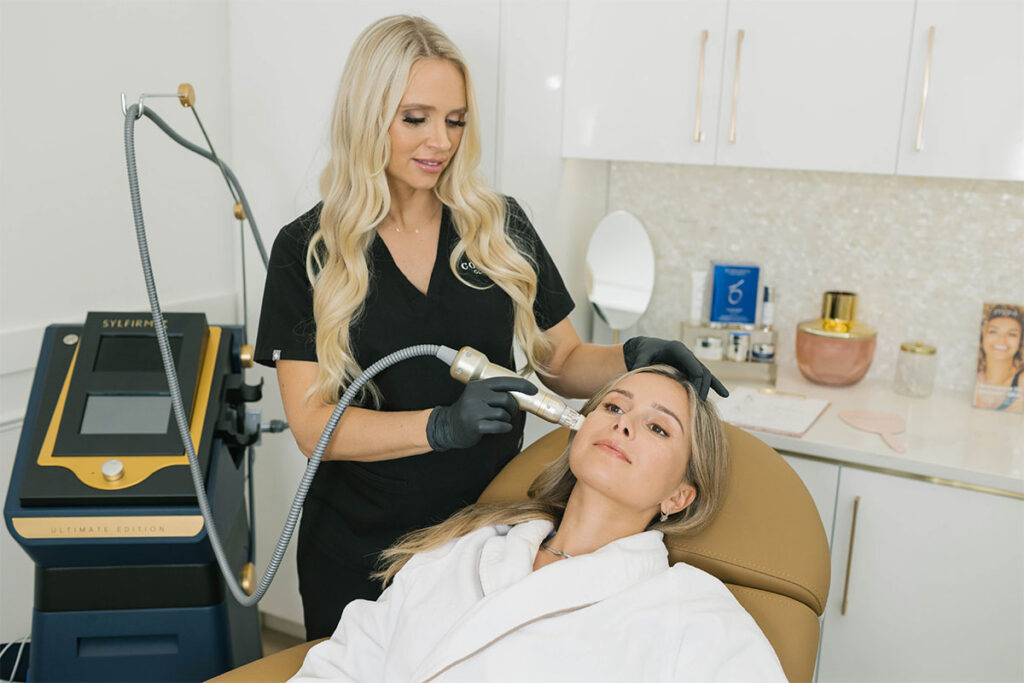
- Mechanism: RF devices use electrical currents to generate a controlled thermal (heat) effect. This energy is not absorbed by a specific chromophore like melanin or water; instead, it causes resistance as it passes through the skin’s tissue. This resistance generates uniform heat throughout the dermis and even into the deeper subcutaneous fat layer.
- Biological Effect: The controlled thermal injury heats the collagen fibers to a specific threshold (around 60-70°C), causing them to immediately contract and tighten. This provides an initial lifting effect. More importantly, the heat injury triggers a robust wound-healing response, forcing the body to produce massive amounts of new collagen and elastin over the following 3-6 months. This neocollagenesis leads to gradual, progressive skin tightening and thickening.
- Key Takeaway: RF is a volumetric heating technology. It treats a broad volume of tissue, making it exceptionally effective for addressing overall laxity and contouring, particularly on the jawline, cheeks, and body.
Laser Skin Tightening (e.g., Fractional CO2, Erbium): The “Surface Remodeling” Resurfacer
- Mechanism: Lasers for tightening are typically ablative or non-ablative fractional lasers. They use a specific wavelength of light that is intensely absorbed by water, which is a primary component of skin cells.
- Ablative (CO2/Erbium): These lasers vaporize entire columns of tissue, creating microscopic wounds surrounded by healthy skin.
- Non-Ablative: These bypass the epidermis and deliver thermal energy to the dermis to stimulate collagen.
- Biological Effect: The primary mechanism is fractional photothermolysis. By creating precise micro-injuries, the laser forces a powerful healing response. As the skin heals, it sheds the damaged, pigmented surface layers and replaces them with new, tighter skin. The collagen remodeling is intense, leading to significant tightening, but it is often more focused on the superficial to mid-dermis compared to RF’s deeper reach.
- Key Takeaway: Laser tightening is inherently a resurfacing treatment. Its primary strength is addressing surface-level concerns like fine lines, wrinkles, and texture, with skin tightening being a valuable secondary benefit.
Matching the Tool to the Task: Clear Indications for Each Technology
Your specific skin concerns should dictate the choice of technology.
Choose Radiofrequency If Your Primary Concern Is:
- Generalized Skin Laxity: Sagging along the jawline (jowls), cheeks, neck, and décolletage.
- Body Contouring: Lax skin on the abdomen, thighs, or arms after weight loss or pregnancy.
- Mild to Moderate Skin Looseness: For those who have lost the “snap” in their skin but do not have severe surface damage.
- Minimal Downtime: Most non-ablative RF treatments (like Thermage) have zero to minimal social downtime.
Choose Laser Skin Tightening If Your Primary Concern Is:
- Surface Texture and Wrinkles: Significant fine lines, deep wrinkles (like around the mouth), and sun-damaged skin.
- Pigmentation Issues: Sun spots, age spots, and uneven skin tone.
- Acne Scars: Fractional lasers are the gold standard for treating atrophic acne scarring.
- Combined Laxity and Surface Damage: When you need to address both sagging and textural issues simultaneously.
Safety and Downtime: A Spectrum of Recovery
The recovery experience is a major differentiator between these treatments.
Radiofrequency:
- Safety: Very high. Since RF doesn’t target the epidermis, the risk of burns, scarring, and pigment changes is low in the hands of a skilled practitioner. It is safe for all skin types, including Fitzpatrick IV-VI.
- Downtime: Typically minimal to none. Non-ablative RF may cause redness and swelling for a few hours. More aggressive micro-needling RF devices may have 1-3 days of redness, resembling a sunburn.
Laser (Ablative Fractional):
- Safety: Higher risk profile. Because it intentionally damages the epidermis, there is a risk of infection, prolonged redness, hyperpigmentation (especially in darker skin tones), and hypopigmentation if not performed correctly.
- Downtime: Significant. After an ablative CO2 laser, the skin will be raw, oozing, and swollen for 7-10 days. Full recovery, with redness fading completely, can take 3-6 months. Non-ablative fractional lasers have much less downtime, usually 2-3 days of redness and swelling.
The Synergistic Power of Combination Treatments
Often, the most transformative results come from strategically combining RF and laser, leveraging the strengths of both.
A Common and Highly Effective Strategy:
- RF First (The Foundation): A session of RF is performed to target deep laxity and stimulate foundational collagen production in the dermis. This addresses the structural “sag.”
- Laser Second (The Finishing Touch): Several months later, after the initial collagen from the RF has begun to build, an ablative or non-ablative fractional laser is used to resurface the skin. This perfects the texture, smooths fine lines, and provides an additional layer of tightening closer to the surface.
This combination approach treats the skin in a multi-dimensional way—from the deep structural layer to the superficial textural layer—yielding a more comprehensive rejuvenation than either treatment could achieve alone.
Long-Term Effectiveness: Setting Realistic Expectations
Both technologies provide long-lasting, but not permanent, results.
- Radiofrequency: The results are not immediate. The initial contraction provides a subtle lift, but the main event—collagen remodeling—unfolds over 3-6 months. The results can last 1-3 years, depending on the device, the number of treatments, and the individual’s aging process. Maintenance sessions are recommended to sustain the effect.
- Laser Skin Tightening: Results from ablative lasers continue to improve for up to 6-12 months as collagen remodels. The effects are very long-lasting. The skin will never return to its pre-treatment condition. The tightened, resurfaced results can last 5+ years, although the natural aging process will, of course, continue. You are essentially setting back your skin’s clock.
Conclusion: A Decision of Depth vs. Detail
The debate between laser skin tightening and radiofrequency is not about finding a winner, but about identifying the right tool for your unique aesthetic blueprint.
- If your main issue is sagging, jowls, and loss of contour without major surface wrinkles, Radiofrequency is your champion. It delivers a natural, progressive lift with minimal disruption to your life.
- If your main issue is sun damage, deep wrinkles, and poor texture with some laxity, Laser Skin Tightening is the more comprehensive solution. It requires a commitment to downtime but offers transformative resurfacing and tightening.
The most advanced approach, often employed by leading dermatologists, is to see them not as competitors, but as partners. By using RF to build a strong, tight foundation and laser to create a flawless surface, you can achieve a level of rejuvenation that truly addresses the multifaceted nature of skin aging. Your final decision should be made in consultation with a board-certified dermatologist or a highly experienced practitioner who can accurately assess your skin’s needs and map out a strategic, personalized treatment plan.